- Dec 23
- Von Pecron LLC

When a power outage happens, most household inconveniences are manageable—until the refrigerator stops running. Once that happens, food safety becomes a real concern. Within hours, temperatures rise, and by the end of the day, meat, dairy, and frozen food may no longer be safe to consume.
That’s why refrigerators are often the top priority when homeowners look for backup power solutions. In recent years, portable power stations have become a reliable alternative to traditional gas generators, especially for indoor use and emergency preparedness.
This article explains how to choose the right portable power station for a refrigerator, how long it realistically lasts, and which mistakes to avoid before buying.
Why Portable Power Stations Are Better Than Gas Generators for Refrigerators
Gas generators can keep appliances running, but they come with downsides: noise, fuel storage, exhaust fumes, and safety risks. Running them near living spaces is dangerous, and maintaining fuel during emergencies adds unnecessary stress.
Portable power stations solve these problems. They operate silently, produce zero emissions, and are safe for indoor use. Most modern models also support solar charging, allowing refrigerators to stay powered even during extended outages.
For homeowners who want clean, simple, and dependable backup power, battery-based power stations are increasingly becoming the preferred choice.
What Size Power Station Can Run a Refrigerator?
Choosing the right size isn’t just about battery capacity. A refrigerator places two different demands on a power station.
Running Power vs. Surge Power
-
Running watts: the continuous power needed while the fridge is operating (usually 150–400W).
-
Surge watts: a brief spike when the compressor starts, often 2–3 times higher than the running load.
For example, a refrigerator with a 250W running load may require 700–800W during startup. If the power station can’t handle this surge, the refrigerator won’t start—even if the battery is large.
How Much Battery Capacity Do You Need?
Battery capacity is measured in watt-hours (Wh) and determines how long your refrigerator will run.
A practical estimate looks like this:
Required capacity (Wh) ≈ Running watts × desired runtime (hours) × 1.2
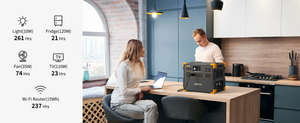
If your refrigerator averages 120W and you want 24 hours of runtime:
120 × 24 × 1.2 = 3,456Wh
In real-world use, refrigerators don’t run continuously. Most compressors cycle 30–60% of the time, meaning actual runtime is often longer than basic calculations suggest—especially if the fridge door remains closed.
Recommended Power Station Sizes by Refrigerator Type
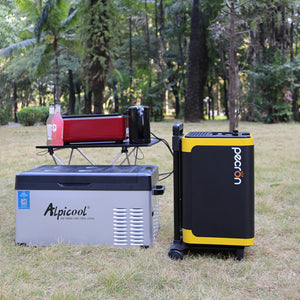
Small or Portable Refrigerators
Mini fridges, camping fridges, beverage coolers
-
200–500Wh
Suitable for short trips or daily recharging.
Standard Household Refrigerators
Most kitchen refrigerators
-
1000–2000Wh
Covers short outages and emergency backup needs.
Large Refrigerators and Freezers
Side-by-side fridges, chest freezers
-
3000Wh or more
Better for extended outages or solar-powered setups.
For long-term reliability, LiFePO₄ (LFP) batteries are strongly recommended. They offer longer lifespan, better thermal stability, and higher safety compared to traditional lithium-ion batteries.
How Long Will a Power Station Run a Refrigerator?
Runtime depends on more than battery size.
Key factors include:
-
Refrigerator efficiency (newer models consume less power)
-
Ambient temperature (hot weather increases compressor cycles)
-
Battery chemistry (LFP batteries maintain capacity longer)
-
User habits (frequent door opening increases energy use)
How to Extend Runtime During an Outage
-
Pre-cool food before expected outages
-
Minimize door openings
-
Avoid placing warm food inside
-
Enable eco or low-idle modes on the power station
For longer outages, pairing a power station with solar panels allows daytime recharging and significantly extends refrigerator runtime.
How Much Does a Solar Generator for Refrigerator Backup Cost?
A solar generator combines a power station with solar panels to provide renewable backup power.
Typical price ranges:
-
1000–1500Wh (no panels): $300–$500+
-
2000–3000Wh (with basic solar panel): $600–$2,000+
-
3000Wh+ expandable systems: $1,000–$5,000+
Solar generators using LiFePO₄ batteries usually cost slightly more upfront but offer a much lower cost per cycle over time.
Recommended Portable Power Stations for Refrigerators
Pecron E1000LFP – Entry-Level Backup
Best for short outages and smaller refrigerators.
-
1024Wh capacity, LiFePO₄ battery
-
1800W output with UPS function
-
High-current 20A DC Output
- Automatic battery heating
Pecron F3000LFP – Best Overall Value
Ideal for most households and longer outages.
-
2800W Max AC+Solar Input in 1.5 Hours
-
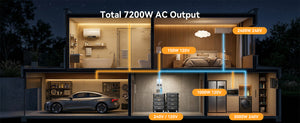
3600W output (4500W surge in 5s); 3072Wh Capacity
-
Expandable battery system
Pecron E3600LFP – Large Appliances & Preparedness
Designed for serious home backup scenarios.
-
Supports 240V appliances with dual units
-
Expandable up to 15.36kWh
-
High-current 30A DC output
- 2400W Solar Input Max. 3200W AC Charging with 30A cable
Common Mistakes to Avoid When Buying a Power Station for a Refrigerator
Ignoring surge power: Battery size alone doesn’t guarantee compatibility.
Overbuying capacity: Bigger systems cost more and may never be fully used.
Choosing short-lifespan batteries: Cheaper batteries degrade faster over time.
Assuming solar is too expensive: Many systems are modular and expandable.
Overlooking cold-weather performance: Temperature ratings matter in winter climates.
Final Thoughts
The right portable power station can protect your food, reduce stress during outages, and provide long-term peace of mind. For occasional blackouts, a mid-sized unit may be enough. For frequent or extended outages, adding solar charging transforms a power station into a dependable home backup solution.
Choosing wisely means balancing output, capacity, battery chemistry, and real-world usage—not just marketing numbers.