- Nov 11
- Par Pecron LLC

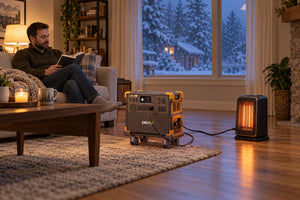
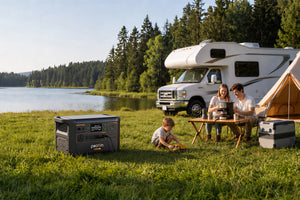
A simple backup plan keeps the refrigerator, lights, and communications running without trying to power everything at once.
A power outage on Thanksgiving is different from an ordinary evening blackout. The refrigerator is full, several appliances may be in use, guests are arriving, and every closed refrigerator door suddenly matters. A portable power station can keep selected essentials running, but the useful question is not whether it can power the whole kitchen. It is which loads deserve the available energy first.
The best plan is usually quieter and simpler than people expect: protect cold food, keep communication available, use efficient lighting, and run high-wattage cooking appliances only in short, deliberate blocks. That approach preserves battery capacity and makes it easier to adjust if the outage lasts longer than expected.
Prepare a 24-Hour Plan Before Thanksgiving
Do the planning while the kitchen is calm. Write down the devices that truly matter, their running watts, and how many hours they may need power. Then test the actual setup, including the cords and adapters you expect to use. A label on an appliance is useful, but a short test with the complete load is better.
If the household has not already assigned priorities, start with the winter power outage checklist. For Thanksgiving, add food storage, cooking, guest communication, and any medical needs that may be present in the home.
Before the forecast worsens or local utilities issue warnings:
• Charge the power station and confirm that every planned device starts normally.
• Place appliance thermometers in the refrigerator and freezer.
• Freeze gel packs and containers of water, and keep an insulated cooler ready.
• Pre-cool the refrigerator and freezer, but do not lower them beyond the manufacturer’s recommended settings.
• Charge phones, power banks, flashlights, radios, and battery-backed carbon monoxide alarms.
• Choose a backup meal that does not depend on several electric cooking appliances running together.
• Keep extension cords out of walkways and use only cords rated for the intended load.
What to Do in the First 15 Minutes
First, confirm whether the problem is limited to the home or affects the neighborhood. Check the breaker panel only if it is safe and familiar. Report the outage, note the utility estimate, and unplug sensitive electronics that do not need to remain connected. Leave one light switched on so you know when utility power returns.
Do not immediately open the refrigerator to reorganize food. Start any medical or safety equipment that cannot be interrupted, then decide whether refrigeration needs power yet. If the outage estimate is short, closed doors may protect the food without drawing from the battery at all.
Keep Food Safe Without Wasting Battery Capacity
According to FoodSafety.gov power outage guidance, an unopened refrigerator keeps food cold for about four hours. A full freezer can hold a safe temperature for about 48 hours, while a half-full freezer is closer to 24 hours, provided the door stays closed.
Those times are not a reason to ignore temperature. They are a planning window. Use appliance thermometers, minimize door openings, and move frequently used drinks or condiments to a cooler so the main refrigerator can stay shut. If refrigerated perishable food has been above 40°F for two hours or more, it should be discarded. Never taste food to decide whether it is safe.
Refrigerators cycle rather than draw their rated wattage continuously, so runtime varies with room temperature, door openings, food load, efficiency, and compressor behavior. The guide to choosing a portable power station for a refrigerator explains startup demand and realistic refrigerator sizing in more detail.
If battery capacity is limited, scheduled refrigerator operation may be more practical than leaving it connected continuously. Watch the internal temperature and the power station display, and shorten the interval between charging periods if the refrigerator warms faster than expected. Food safety, not a fixed schedule, should control the decision.

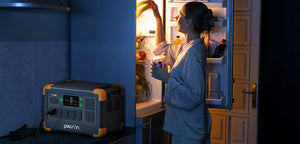
Thermometers, ice, and a closed refrigerator can preserve food without using battery power immediately.
Build a Thanksgiving Load Priority
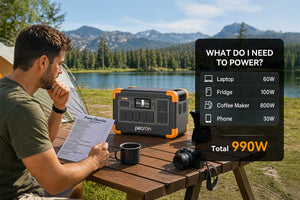
Treat the available battery as a budget. A device with a modest wattage can still consume meaningful energy when it runs all day, while a microwave may draw much more power but only for a few minutes. Rank loads by consequence, not by convenience.
|
Priority |
Load group |
Why it matters |
How to manage it |
|
1 |
Medical and safety equipment |
Health or immediate safety |
Follow the device manufacturer and healthcare provider instructions. Keep a separate emergency backup for life-sustaining equipment. |
|
2 |
Refrigerator and freezer |
Food protection |
Keep doors closed, monitor temperature, and power in planned cycles when appropriate. |
|
3 |
Router, phones, radio, LED lights |
Communication and basic visibility |
Use efficient lighting and charge phones in blocks instead of leaving every device connected. |
|
4 |
Microwave, coffee maker, electric skillet |
Short cooking tasks |
Run one high-wattage appliance at a time after checking output and surge limits. |
|
5 |
Television and comfort loads |
Convenience |
Use only after essential runtime is protected and the likely outage duration is clearer. |
The order may change when someone depends on refrigerated medicine, powered mobility equipment, a CPAP machine, or another medical device. Plan those needs with the healthcare provider and device manufacturer before the holiday rather than estimating during an outage.

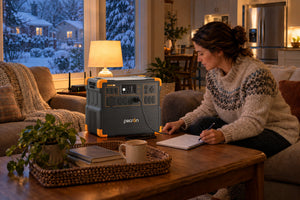
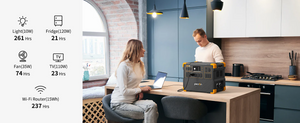
Communication and efficient lighting provide useful backup with relatively modest energy demand.
Use Cooking Appliances One at a Time
Microwaves, coffee makers, electric kettles, toaster ovens, induction cooktops, and electric skillets can demand substantial power. Check the appliance label and the power station’s outlet rating before connecting anything. The inverter must handle both the appliance’s normal draw and any startup surge.
Short cooking sessions can be reasonable when the equipment is compatible, but avoid running several heating appliances together. Finish one task, disconnect it, check the remaining battery percentage, and then decide whether the next task is worth the energy. A cold meal or shelf-stable backup menu may preserve far more runtime than trying to reproduce the original holiday cooking schedule.
A full-size electric oven, hardwired range, furnace, or other 240V appliance is not the same as a plug-in countertop appliance. Do not improvise a connection or feed power into a wall outlet. Use only manufacturer-approved connections and properly installed transfer equipment where required.
Estimate Runtime Before Guests Arrive
A useful planning estimate is:
Estimated runtime = battery capacity (Wh) × 0.85 ÷ average load (W)
The 85% factor is a planning allowance for inverter conversion and system overhead, not a guaranteed efficiency figure. Actual results change with temperature, battery condition, appliance cycling, standby draw, and load size.
|
Rated capacity |
Planning energy at 85% |
100W average load |
300W average load |
1,000W average load |
|
1,024Wh |
870Wh |
8.7 hours |
2.9 hours |
0.9 hour |
|
2,048Wh |
1,741Wh |
17.4 hours |
5.8 hours |
1.7 hours |
|
3,840Wh |
3,264Wh |
32.6 hours |
10.9 hours |
3.3 hours |
|
5,120Wh |
4,352Wh |
43.5 hours |
14.5 hours |
4.4 hours |
Use the average load over the planning period, not the highest wattage printed on one device. A refrigerator that cycles, a lamp used only after dark, and phones charged in short blocks create a changing load. The power station display provides the best correction once the outage is underway. For more appliance examples, see our portable power station runtime chart.
Choosing a PECRON Power Station for Thanksgiving Backup
Choose output power first and capacity second. Output determines whether the connected devices can operate together; capacity determines how long the plan can continue. A larger battery does not make an unsafe or incompatible connection acceptable.
|
Model |
Rated output / capacity |
Best fit in this guide |
Planning note |
|
E1000LFP |
1,800W / 1,024Wh |
Router, phones, lights, refrigerator cycling, and short use of a compatible countertop appliance |
Best for a tightly managed essential-load plan |
|
E2400LFP |
2,400W / 2,048Wh |
Longer refrigerator support, communications, lighting, and selected cooking tasks |
A practical middle size when loads are scheduled |
|
E3800LFP |
4,200W / 3,840Wh |
Refrigerator or freezer, communications, lighting, and planned short-duration kitchen loads |
Primary all-around recommendation for this guide |
|
F5000LFP |
7,200W / 5,120Wh; 120V/240V |
Larger home-backup plans, longer runtime, and equipment that requires greater output flexibility |
Confirm voltage, outlet, and connection requirements before use |
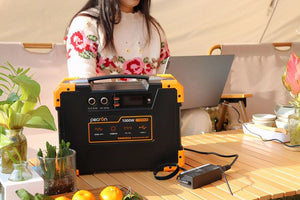
For a household that wants enough headroom for refrigeration, communications, lighting, and carefully scheduled kitchen appliances, the PECRON E3800LFP is the primary recommendation in this guide. Its 4,200W rated output and 3,840Wh capacity provide more flexibility than a compact backup unit, while the actual runtime still depends on the connected loads.
The PECRON F5000LFP adds 5,120Wh of rated capacity and 120V/240V output for broader home-backup planning. That capability does not replace proper installation. Directly connect only compatible loads, and use qualified electrical work and approved transfer equipment where a home circuit connection is required.

Protect refrigeration first and use high-wattage kitchen appliances separately when the power budget allows.
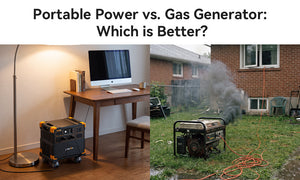
Fuel Generator and Carbon Monoxide Safety
A battery power station does not burn fuel during normal operation, but some households also keep a fuel-powered generator for longer outages. The CPSC generator safety guidance says a portable generator should never be used inside a home, garage, basement, crawlspace, shed, or other enclosed area, even with doors or windows open. Operate it outdoors at least 20 feet from the home or building, with the exhaust directed away from windows, doors, and vents.
Keep working carbon monoxide alarms on every level of the home and outside sleeping areas. Never use a charcoal grill, camp stove, or outdoor cooking appliance indoors. Do not use a gas range or oven to heat the home. If anyone develops headache, dizziness, nausea, weakness, confusion, or other possible carbon monoxide symptoms, move to fresh air and seek emergency help.
Thanksgiving Power Outage Checklist
• Power station fully charged and tested with the planned loads
• Medical and safety equipment assigned first priority
• Refrigerator and freezer thermometers installed
• Cooler, ice packs, and frozen water containers ready
• Phones, radios, flashlights, and power banks charged
• Appliance wattages and startup requirements recorded
• Simple no-cook or low-energy backup meal available
• Extension cords rated for the load and placed away from walkways
• Carbon monoxide and smoke alarms tested
• Utility alerts, local weather information, and family communication plan confirmed
Frequently Asked Questions
What should I power first during a Thanksgiving outage?
Medical and safety equipment comes first. After that, protect refrigerated food, keep communications available, and use efficient lighting. Delay comfort loads and high-wattage cooking until the likely outage duration and remaining battery capacity are clear.
How long will food stay safe in the refrigerator without power?
An unopened refrigerator keeps food cold for about four hours. A full freezer is about 48 hours and a half-full freezer about 24 hours when the door remains closed. Use appliance thermometers and discard refrigerated perishable food that has been above 40°F for two hours or more.
Can I cook with a portable power station?
Yes, when the appliance is compatible with the inverter, outlet, and surge ratings. Microwaves, kettles, coffee makers, toaster ovens, and induction cooktops can use substantial power, so run one at a time and check the remaining battery after each task.
Can I connect a power station to a wall outlet to power the house?
No. Never backfeed household wiring through a wall outlet. Power compatible appliances directly, or use manufacturer-approved equipment and a properly installed transfer system completed by a qualified electrician where applicable.
Should I keep the refrigerator connected continuously?
Not always. During a short outage, keeping the door closed may preserve food without using the battery. For a longer outage, monitor temperature and use planned operating periods when appropriate. The schedule should change if the refrigerator warms faster than expected.
Can solar panels recharge the power station during the outage?
A compatible system can recharge from solar when sunlight and operating temperatures allow. Late-November days may be short or cloudy, so treat solar as useful replenishment rather than assuming it will replace all of the energy used by refrigeration and cooking.
Keep the Holiday Simple and the Essentials Running
A Thanksgiving outage does not require powering every appliance. Protect food, medical needs, communication, and the battery budget—and test the plan before guests arrive.